Pillows · Comfort by design
How to Assess Medium-Fill Pillow Support Before You Choose
“Medium fill” sounds like a useful promise: neither a cloud that disappears beneath your head nor a firm block that holds its shape at all costs. But the label is only a starting point. A pillow’s real support depends on its materials, construction, loft and the way it responds to your body.
Published October 29, 2026
On a bed, support is not a number printed on a tag. It is an interaction: your head presses down, the fill shifts or compresses, and the pillow either keeps the neck in a comfortable position or leaves it working against the mattress. “Medium” describes a feel in broad strokes, not a universal measurement. Two pillows with the same firmness label may behave differently once they are under your head.
That distinction matters when comparing down pillows. Their soft, springy fill can feel inviting at first contact, but the amount of down, the size and arrangement of the chambers, the pillow’s dimensions and the sleeper’s position all influence how much support remains after compression. A medium-fill pillow may feel gently cushioning to one person and too yielding to another.
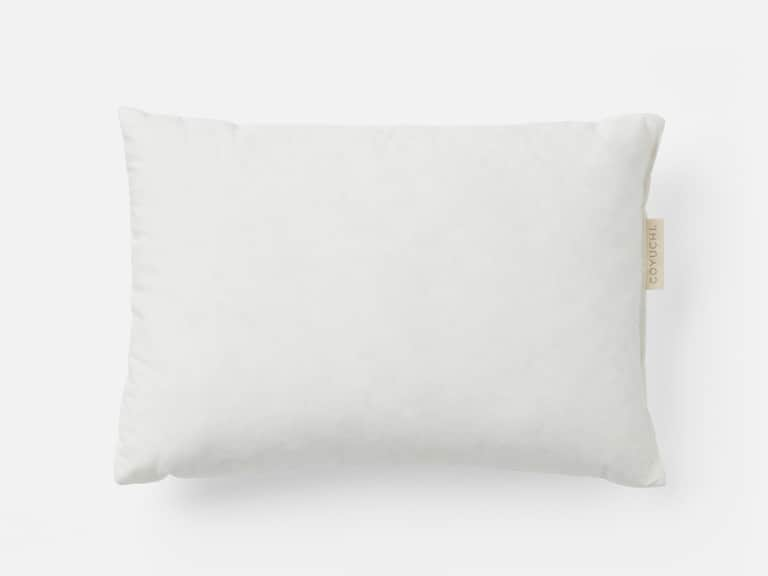
The Clean Bedroom’s Madison and Manhattan down pillows illustrate two different approaches to the middle ground. The Madison is described as a medium-firm pillow filled with 750-fill-power Hungarian white goose down. The Manhattan pairs 850-fill-power Siberian white goose down with a two-inch gusset and is also described as medium firm, but its construction creates a higher-loft profile. The shared label does not make them interchangeable. It makes them useful examples of why assessing support means looking beyond the word “medium.”
What “medium fill” can—and cannot—tell you
Fill level, firmness and loft are related, but they are not synonyms. A manufacturer may use “medium” to describe a pillow’s overall feel or firmness. Fill power, by contrast, describes the lofting capacity of down: how much space a given weight of down can occupy under a standardized test. It is not a firmness rating and does not tell you, on its own, whether a pillow will hold your head at the right height.
Fill composition also changes the feel. Down clusters are light and pliable, tending to compress and shift as pressure is applied. Feather blends generally feel more structured because feathers have quills as well as softer material. A pillow with a supportive core and softer outer chambers can behave differently again: it may compress at the surface while retaining more shape beneath.
Shell fabric and construction add another layer. A tightly woven cotton cover helps contain the fill; a gusset—the fabric panel around the pillow’s edge—can preserve height at the perimeter. Baffle or chamber designs can influence where fill sits and how evenly it is distributed. These details do not guarantee comfort, but they help explain why two pillows that sound similar on paper may feel different in use.
In practice, the key question is not simply, “Is it medium?” It is: “How much does it compress under my head, and where does it leave my neck?” A label narrows the field. Your own posture and the pillow’s behavior complete the assessment.
Start with the shape of your sleep
Your sleeping position changes the space a pillow needs to fill. The goal is generally to keep the head and neck in a comfortable, reasonably neutral relationship with the torso—not to force the body into a rigid alignment. Mattress firmness, shoulder width and personal anatomy can all affect how much height feels right, so sleep position is a useful guide rather than a rulebook.
- Side sleepers often need more height to bridge the space between the shoulder and head. A pillow that collapses substantially may leave too little support, even if it initially feels plush.
- Back sleepers commonly prefer a moderate profile that cushions the head without pushing the chin toward the chest. The right amount of loft varies with body shape and mattress feel.
- Stomach sleepers often find a lower, softer pillow more comfortable because a high, firm pillow can turn the neck sharply to one side. Some prefer little or no pillow beneath the head.
- Combination sleepers may benefit from a pillow that can be repositioned or reshaped, but should notice whether it retains enough fill after repeated movement.
Try to assess the pillow in the position you actually sleep in—not only while sitting upright or holding it in a showroom. If you move between positions, test the transitions as well. A pillow that seems ideal on your back may feel too low when you roll onto your side.
Two medium-support approaches from The Clean Bedroom
The Madison Down Pillow is positioned as a medium-firm option with 750-fill-power large-cluster Hungarian white goose down. Its cotton cover is tightly woven, and it is offered in several sizes, including Standard/Queen, King and Euro. The product description presents its feel as adaptable for back and side sleepers. That is a helpful starting claim, but individual comfort still depends on how the pillow compresses for the person using it.
The Manhattan Down Pillow has a different profile. It uses 850-fill-power large-cluster Siberian white goose down and has a two-inch gusset. It is described as medium firm with high loft. That combination matters: the gusset helps the pillow maintain a fuller edge, while the higher fill power indicates greater lofting capacity by weight. Neither feature alone proves that it will suit every side or back sleeper, but together they suggest a more elevated shape than the Madison’s straightforward medium-firm description might imply.
Comparing the two shows why “medium” is not a complete specification. The Madison’s stated firmness sits alongside a 750 fill-power fill; the Manhattan combines a medium-firm feel with 850 fill power and a gusseted edge. Those details point to different potential experiences under pressure. The more useful comparison is not which number is higher, but how each pillow’s height and resilience match the sleeper’s needs.
Dimensions also matter. Standard, Queen and King sizes change the pillow’s width and fill weight; they are not merely decorative variations. If a pillow is too large for the sleep surface or your usual position, it may be awkward to shape or keep in place. Check the size against the bed and pillowcase, but prioritize the sleeping profile over the look of a neatly arranged bed.
A practical support test before you settle in
When possible, test a pillow under conditions that resemble a normal night. A few seconds of squeezing can tell you something about resilience, but not enough about support. Use a simple, repeatable check:
- Settle into your usual position. Use the pillow as you would at home, with the mattress and any topper you normally sleep on.
- Notice the first compression. Does the pillow cushion your head while keeping a stable base, or does it flatten quickly? Softness at first touch is not the same as support after compression.
- Check head height. Ask whether your head feels tipped up, dropped down or comfortably supported. A mirror or a second person may help you observe posture, but comfort remains personal.
- Stay in position for a few minutes. Down can shift as it settles. Give the fill time to respond instead of judging only the initial feel.
- Move as you would overnight. If you roll or change positions, see whether the pillow can be reshaped and whether it keeps enough loft where you need it.
- Repeat after fluffing. A quick shake may restore some loft. Consider how much adjustment you are willing to make each night.
At home, a trial period is more revealing than a brief store test. Give a new pillow several nights, provided the seller’s return terms allow it. Notice whether you wake with a persistent sense that your head has sunk too far or is being pushed up. Do not treat a single uncomfortable morning as a diagnosis: mattresses, habits and other factors influence how you feel. But a repeated mismatch is useful evidence that the pillow’s profile may not suit you.
Questions worth asking before you choose
Product pages often devote plenty of space to fill power and fabric. For a medium down pillow, ask questions that connect those specifications to what you will feel:
- What exactly does “medium” describe? Is it the manufacturer’s firmness category, a fill-weight option or a broad description of feel?
- What is inside? Pure down, feather-and-down blend, or a layered design? The composition affects softness, structure and response to pressure.
- How is the pillow constructed? Look for information about gussets, chambers, baffles or other features that influence shape and fill distribution.
- What are the dimensions and fill weights? These give context, though they cannot predict precisely how the pillow will feel for every sleeper.
- How should it be cared for? Washing and drying instructions vary. Down must be dried thoroughly to avoid lingering moisture and clumping; some pillows are best professionally laundered.
- Can you try it at home? Check return, exchange and hygiene policies before opening or using the pillow.
Care is part of the support question because a pillow’s feel may change when fill clumps, shifts or loses loft. A washable protector can reduce soil reaching the pillow, while regular fluffing may help redistribute fill. Follow the manufacturer’s instructions rather than assuming that every down pillow can be washed in the same way.
Common mistakes in comparing down pillows
Choosing by fill power alone. Higher fill power means more loft per unit of down under test conditions; it does not automatically mean a firmer pillow or better neck support. The Manhattan’s 850 fill power and gusset suggest a lofty construction, but the right choice still depends on how it compresses for you.
Assuming “medium” is standardized. The word can be useful for comparing options within a maker’s range. Across different brands and constructions, it may not describe the same feel. Look for construction details and, where available, a clear explanation of firmness categories.
Judging by uncompressed appearance. A pillow can look high and full on the bed but settle substantially when loaded. Conversely, a pillow that seems modest before use may have enough resilience for a particular sleeper. Test the working height, not just the display height.
Confusing softness with a lack of support. A soft surface can still be supportive if the pillow retains enough underlying structure. The question is whether the combination works for your position—not whether the pillow feels firm in your hands.
Ignoring the mattress. A plush mattress may allow the shoulder to sink farther, changing the space a side sleeper needs the pillow to fill. A firmer surface may create a different relationship. Pillow choice is part of the sleep setup, not an isolated decision.
Comfort is personal; persistent pain is different
A pillow can be adjusted, replaced or used differently. Ongoing neck pain, numbness or other concerning symptoms deserve more than another round of bedding experiments. A pillow guide cannot diagnose the cause of discomfort. If symptoms persist or are severe, consider speaking with a qualified health professional.
For most shoppers, the practical aim is simpler: find a pillow that feels comfortable in the positions they use, stays at a suitable height after compression and fits their preferences for softness and care. There is no single fill composition or firmness label that guarantees that result.
The bottom line
Medium fill is a place to begin, not a verdict. Assess the material, loft, construction and working height together. Then test the pillow in your usual sleeping position and pay attention to what happens after your head settles into it.
The Clean Bedroom’s Madison and Manhattan pillows make the distinction concrete. Both are presented as medium-firm choices, yet the Madison’s 750-fill-power down and the Manhattan’s 850-fill-power fill and two-inch gusset describe different designs. One may feel more suitable than the other depending on the support and height you need. The best comparison is therefore not “Which pillow is medium?” but “Which one stays comfortable for me once the night begins?”
A well-chosen pillow does not need an impressive label. It needs to meet the quiet, individual requirements of the person resting on it: enough cushion, enough support, and a feel that remains comfortable after the first moment of softness has passed.